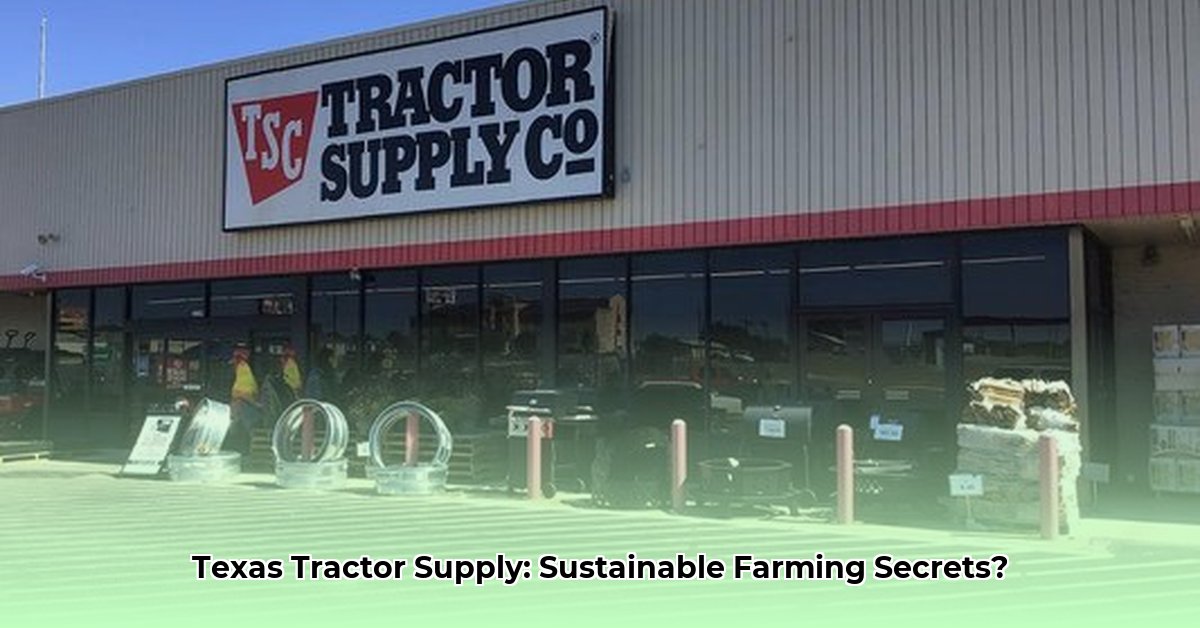
Tractor Supply (TSC) in Brady, Texas, serves as a vital hub for the local agricultural community. But how does this convenience align with the growing need for sustainable farming practices? This article explores TSC's role, examining both its contributions and areas for improvement. For similar resources in other areas, check out this Texas Tractor Supply location.
A Community Resource: More Than Just a Store
TSC isn't merely a retailer; it's a cornerstone of Brady's agricultural landscape. Farmers and ranchers rely on its convenient location and wide selection of products, saving them time and money. Imagine a rancher needing a new water trough; instead of a long journey, they can quickly acquire it at TSC, perhaps picking up fencing supplies or gardening seeds simultaneously. This accessibility is crucial, streamlining operations and reducing costs for busy agriculturalists. However, does this convenience come at the cost of sustainability? This is a key question. How can we balance accessibility with environmentally conscious choices?
Key Insight 1: TSC's convenient location and wide product selection significantly reduce time and operational costs for local farmers and ranchers.
Evaluating TSC's Product Offering: Transparency and Sustainability
TSC stocks a broad range of products, from animal feed and fertilizer to tools and clothing—catering to a diverse clientele. Yet, a crucial question remains: how sustainable are these products? While the store offers a wide selection, clear labeling regarding the environmental impact of many goods is often lacking. Where do the products originate? Are the feed grains produced using environmentally friendly methods? Is the wood sustainably sourced? This lack of transparency hinders informed decision-making for consumers committed to purchasing ethically and sustainably.
Key Insight 2: A lack of transparent information regarding the sourcing and environmental impact of many products at TSC remains a significant area of concern.
Farmer Voices: Perspectives on Sustainability and Choice
Understanding TSC's impact necessitates hearing from those who directly utilize its services. We interviewed several local farmers. While they value the store's convenience and diverse offerings, concerns regarding the limited availability of sustainable options emerged. Mary, a local farmer, said, "Tractor Supply is invaluable, but I wish we saw more clearly labeled, sustainably-produced choices. Balancing environmental responsibility with profitability is an ongoing struggle." This highlights a critical challenge: the balance between affordability and ethically sourced, environmentally friendly products.
Key Insight 3: Local farmers appreciate TSC's convenience but express a strong desire for a broader range of clearly labeled, sustainably-sourced products.
Recommendations for TSC: A Path Towards Greater Sustainability
To enhance its contribution to sustainable agriculture, TSC needs to take proactive steps. A comprehensive sustainability audit of its supply chain, assessing the environmental impact of each product, is essential. This should be followed by the establishment of concrete, measurable sustainability goals—for instance, sourcing a specific percentage of products from certified sustainable sources. Regular progress reports will instill trust and transparency with its customer base. Finally, open dialogue and collaboration with local farmers and environmental organizations will prove crucial in addressing the community's specific needs and concerns.
Broader Community Responsibility: A Shared Journey
Sustainability is a shared responsibility. Tractor Supply's initiatives are a vital component, but not the sole element. Farmers can adopt sustainable practices on their farms. Consumers can support local producers and advocate for sustainable agricultural policies. This collaborative effort is critical for establishing a more environmentally conscious region. How can we all work together to create a truly sustainable agricultural system?
Choosing Sustainable Options at Tractor Supply: A Practical Guide
Navigating the choices at TSC to find truly sustainable products requires careful consideration. Here's a practical guide:
Look for Certifications: Prioritize products bearing organic certifications from reputable organizations (e.g., USDA Organic). This guarantees adherence to established sustainability standards.
Scrutinize Labels: Meticulously examine ingredient lists, avoiding products containing harsh chemicals or synthetic pesticides and fertilizers (check for things like glyphosate). Consider the packaging; recyclable or compostable materials are preferable.
Explore Natural Alternatives: Opt for natural alternatives to conventional chemicals whenever possible. TSC may offer natural insect repellents or compost starters.
Long-Term Perspective: While sustainable products might have a higher initial cost, they often offer long-term cost savings due to reduced reliance on expensive inputs like fertilizers.
Support Local: Inquire about locally sourced products; supporting local businesses reduces carbon emissions and benefits the community.
Ask Questions: Don't hesitate to engage TSC staff about their sustainability initiatives and product sourcing practices.
The Future of Sustainable Agriculture in Brady: Collaboration is Key
The future of sustainable agriculture hinges on collaboration between businesses, farmers, and consumers. TSC plays a critical role in supplying the agricultural community; however, continued progress depends on its commitment to transparent and demonstrable sustainable practices. Further research into sustainable agricultural techniques and enhanced community engagement are essential for achieving lasting, positive change. This collective journey will dictate the ultimate triumph of this model.